This is Mike Polk's blog. He is an attorney in Columbia, SC. Contact him at mike@belserpa.com. Disclaimer: This blog is for information only and is not intended as legal advice.
Although a personal representative doesn’t typically make as much as these guys, a personal representative in South Carolina is entitled to a fee. Generally, unless there are extraordinary circumstances, the personal representative is entitled to 5% of the appraised value of the personal property of the estate, 5% of the sales proceeds from real estate, and 5% of the estate income. The personal representative does not have to take the fee. The good news is that the minimum is fifty bucks. Many of the rules are set forth in S.C. Code Ann. § 62-3-719, if you want to look it up.
Some jurisdictions use the term executor or executrix to identify the person who is in charge of administering an estate. In South Carolina we use the term Personal Representative. For all intents and purposes, it is the same as executor or executrix. If you are someone’s attorney in fact under a power of attorney, you are not automatically the personal representative. This is a common misconception. It is common for an individual to name one person as the attorney in fact under a power of attorney to help handle their finances while they are alive, and to name a different person as Personal Representative to handle the estate. The decision of who does what is the client’s.
The South Carolina Department of Motor Vehicles has some good information. Here is some information about inherited vehicles from the DMV website that should point you in the right direction:
Inherited Vehicles
If you are a surviving owner of a car, and your name and the deceased’s name is separated by “or” on the title, you can sign as the sole owner for an auto title transfer.
If the names on the title were separated by “and“, or if there was only one owner on the title, distribution of the vehicle must be determined by the probate court.
Depending on the determined form of distribution, the court will issue one of the following:
An Affidavit for Collection of Personal Property Pursuant to Small Estate Proceedings.
Personal Representative with an original Certificate of Appointment.
Probate Court Order.
To complete a South Carolina car title transfer, you will need one of the above documents, along with the title transfer form here: 400.
I usually tell my clients to go to the DMV with all of their paperwork – usually a death certificate and certificate of appointment. Most branches have someone up front to help direct people to the forms they need to fill out and where to go. If you are out of state, you can take care of it by mail, but it obviously will take a lot longer.
To get started with the small estate process (less than $25,000 worth of stuff but no real estate) here are the directions for the small estate affidavit: Small Estate Packet
If you qualify for the small estate, you will end up with an affidavit and order showing the DMV where everything should go.
In a full estate, the Personal Representative transfers the automobile using the form 400 above and the certificate of appointment. I have found it easiest to go go the DMV with the title, my certificate of appointment, and a death certificate.
If you can’t find the title, you can order one using the DMV form 400. If you are lucky, you may be able to get the new title and transfer it at the same time. (If there is a lien on the car, the lender usually has the original title.)
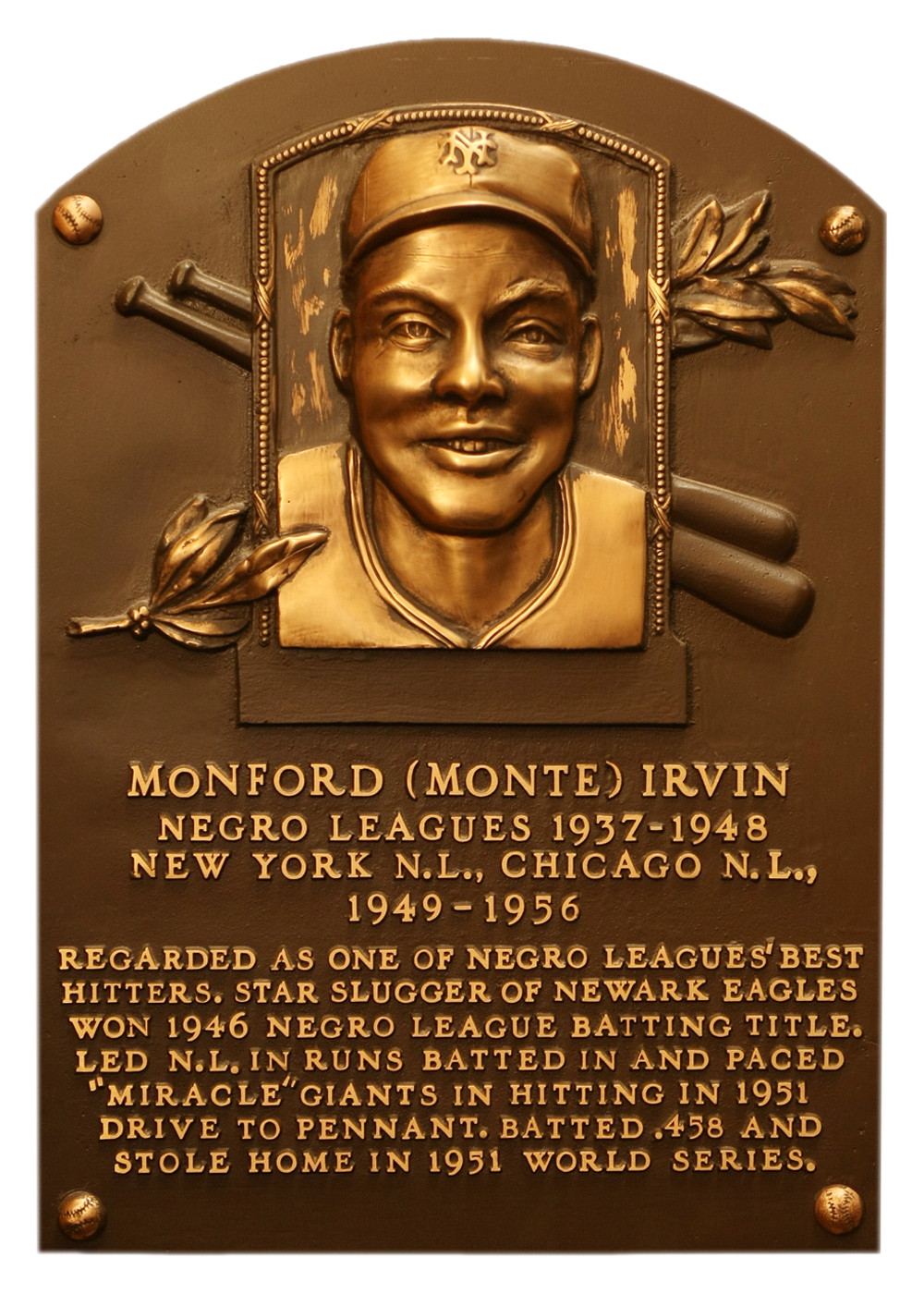
Although not strictly probate or elder law, I was sad to see that Monte Irvin passed away. The New York Times has a good story here. I wish I could have seen guys like Monte Irvin, Satchel Paige, Cool Papa Bell, Martin Dihigo, and the rest play in their primes. It is amazing to think what they went through in their time. He was among the choices to break the color barrier, and he was one of the pioneers after it was broken. Here is a picture of his plaque from the Baseball Hall of Fame, and a link to his page there.
One thing that I have found is that if a family of someone who has died can communicate effectively then the probate process goes smoother. (I suppose that is the same both before and after someone passes away. Effective communication can prevent all kinds of problems. Easier said than done, I know.However, many times I go to court only to find out that the time and expense could have been avoided if the parties had communicated better (or at all.)
Deborah Matthews, an attorney in Virginia, has a great post with some ways to get this year off on the right foot with one such discussion. Check it out here.
PS-This and all my posts are for informational purposes only. I am not your attorney just because you are reading this, and this is not intended as legal advice. If you would like more information, feel free to contact me at (803) 929-0096 or mike(at)belserpa.com.
No. Probate law is different in every state. If you start poking around the internet for information, (which presumably you are because you ended up here) make sure you are getting information relevant to the right state. Just because you helped with someone’s estate in Florida, or they do it a certain way in California, doesn’t mean the same rules apply here in South Carolina.
PS-This and all my posts are for informational purposes only. I am not your attorney just because you are reading this, and this is not intended as legal advice. If you would like more information, feel free to contact me at (803) 929-0096 or mike(at)belserpa.com.
Apparently, in some states now, and in South Carolina in the old timey days, people could file their wills with the probate court while they were alive so that when they died, their heirs knew where the will was. In South Carolina, people do not file their will with the probate court while they are alive. Although some counties have a will vault with some old wills, the practice in South Carolina is for people to keep track of their own wills. For the most part, if an original will is not found, it is presumed to be destroyed. There are exceptions, of course, to this general rule.
In case you are wondering, most attorneys I know do not keep their client’s original will, either, because of liability purposes.
So if you live in South Carolina, keep that original will in a safe place!
PS-This and all my posts are for informational purposes only. I am not your attorney just because you are reading this, and this is not intended as legal advice. If you would like more information, feel free to contact me at (803) 929-0096 or mike(at)belserpa.com.
Many people keep their original estate planning documents in a safety deposit box. If the deceased was the sole owner of the box, how do you access it? South Carolina has a form for that. If you have to access the safety deposit box of someone who died, check out this form and contact the probate court. It should get you started.
If you are the personal representative of an estate in South Carolina it is worth taking a few minutes to check for unclaimed property of the decedent. (While you are at it, check for yourself, too.) This is money that is unclaimed and held by the South Carolina State Treasurer. Here is a link to the treasurer’s website. Happy hunting!
This and all my posts are for informational purposes only. I am not your attorney just because you are reading this, and this is not intended as legal advice. If you would like more information, feel free to contact me at (803) 929-0096 or mike(at)belserpa.com.
The short answer is, although it is theoretically possible, probably not. The State of South Carolina is far down on the list of possible places where your estate goes. If you die without a will in South Carolina it is called dying intestate. Under the laws of intestacy, if you only have a surviving spouse, he or she inherits everything. If you have a spouse and children, then the spouse gets one half and the children split the other half (for example, if you have three kids, they are entitled to one sixth each.) If you only have surviving children, then they will split everything. Each predeceasing child’s share gets split amongst their children. After that, there is a whole intestacy scheme of who gets what when. (Another good reason to do a will). The state, though, is far down the list.
This blog is for information only. It is not legal advice, and I am not your attorney just because you are reading it. If you have any questions, contact an attorney for a full discussion of the issues that may be relevant to your situation.



 Palmetto Probate Blog